Introduction
Electromagnetic compatibility (EMC) testing checks two things: your product’s robustness against interference (immunity) and its politeness to neighbors (emissions). Details about the measurement setup is detailed in the IEC 61000-4-x family (immunity & electrical overstress) and the CISPR standards (emissions). This article explores the various tests and discusses how to amend the PCB layout to ensure a PASS.
The purpose of EMC testing is to ensure that the finished product does not radiate significant RF emissions, thereby hampering with the operation of other products. Additionally, it’s a measure of product robustness to electrical overstress and interference.
The standards specify that a product must abide by these standards before they can be sold. Thus, it is very important.
Below is a summary of the 6 different EMC tests. This article will explore each one in detail.
The first three are related to conducted and radiated emissions/susceptibility whilst the last three relate to the robustness of the product. For the last three, protection devices such as TVS’s, PTC fuses, Schottky diodes etc. will assist in passing these tests.
NOTE: The equipment under test (EUT) may sustain permanent damage during the EMC testing. Thus, it is wise to bring multiple units

Typical hardware setup
See figure 1 below:
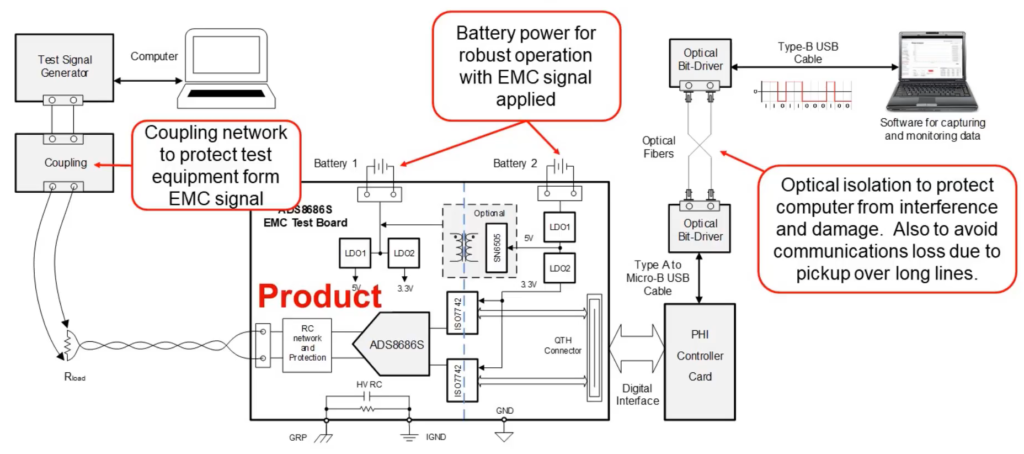
One theme is ensuring the test equipment is not affected by the test. A coupling network and optical isolation achieves this objective.
The measurement lab will contain an anechoic chamber (for radiated tests) with cone absorbers to kill reflections. For some tests, the table will be rotated so the equipment under test (EUT) can be subjected to horizontal and and vertical polarizations.
1. Radiated Immunity — IEC 61000-4-3
Purpose: Verify immunity of the EUT to electromagnetic radiation that is transmitted from transmitters, phones and other sources.
Setup details
- Anechoic chamber
- EUT on non-conductive table at 0.8 m height; 3 m from antenna.
- EUT tested at vertical and horizontal polarizations. The table is rotated to ensure the EUT is exposed to RF from all angles.
- The test signal uses a Yagi antenna from 80 MHz–1 GHz and a horn antenna from 1–2.7 GHz
- RF is 80% AM with 1 kHz sinusoid.
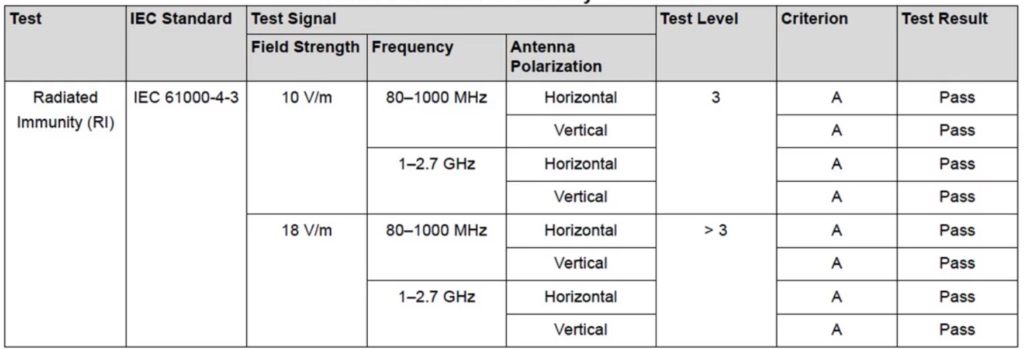
- Typical field strengths: 10 V/m and 18 V/m (10 V/m ≈ IEC level 3; 18 V/m > level 3)
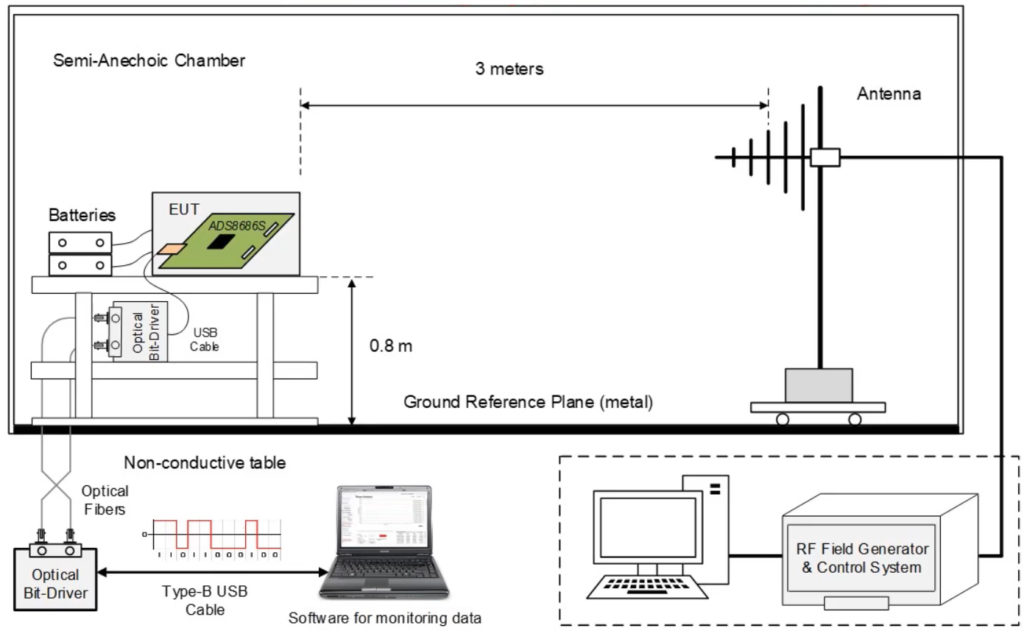
The RF signal is generated by an RF field generator located outside the anechoic chamber.
Batteries are used to power the EUT to avoid interference of the power source.
Communication with the EUT is achieve using fibre optic cables.
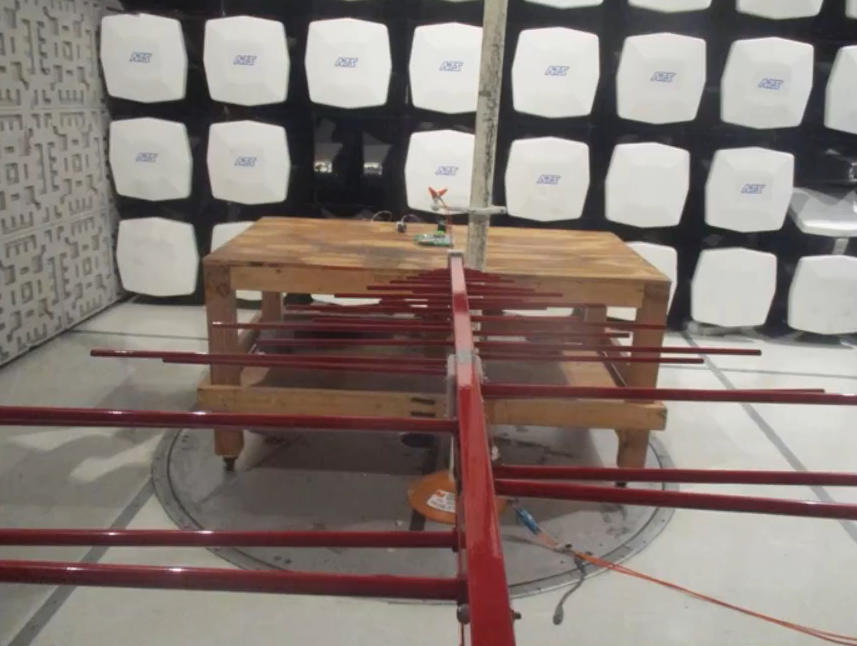
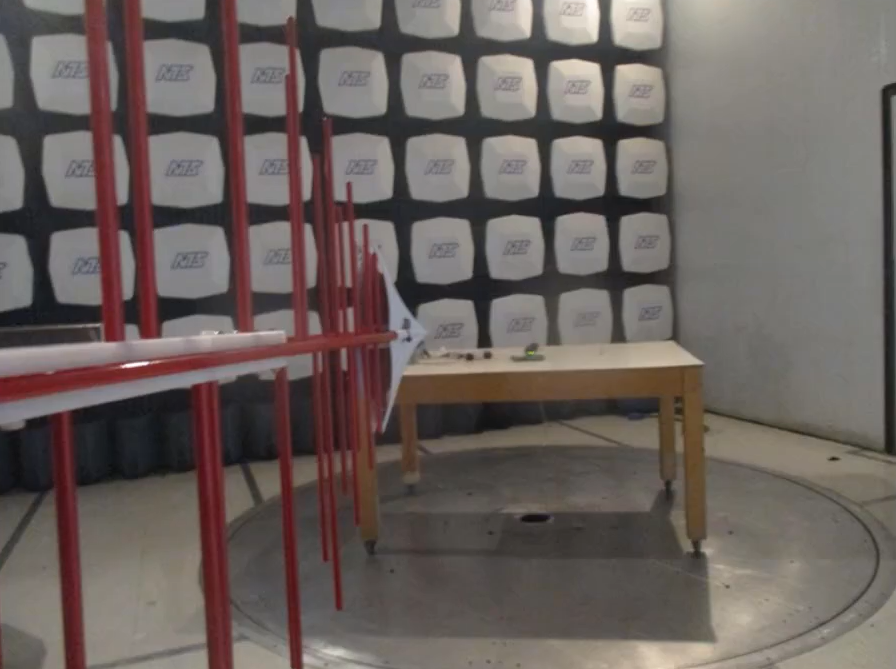
Pass Criteria
The EUT is graded according to how well the EUT resisted the RF interference, causing no loss or degradation of function. The best case is that the performance of the EUT in unaffected. The worst case is that the EUT has sustained permanent damage. This criteria applies to other IEC and CISPR test standards. The IEC standard specifies the field strength of the applied RF signal:
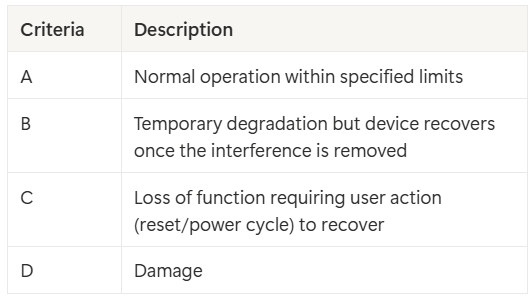
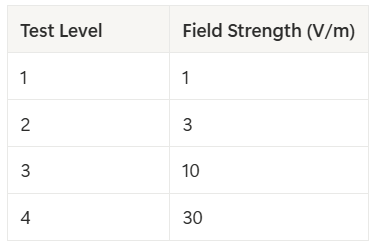
Figure 5 below shows the grading for a particular ADC. The details about the test setup such as field strength, frequency and antenna polarization are included.
2. Radiated Emissions — CISPR 11
Purpose: Ensure the EUT doesn’t exceed RF emission limits.
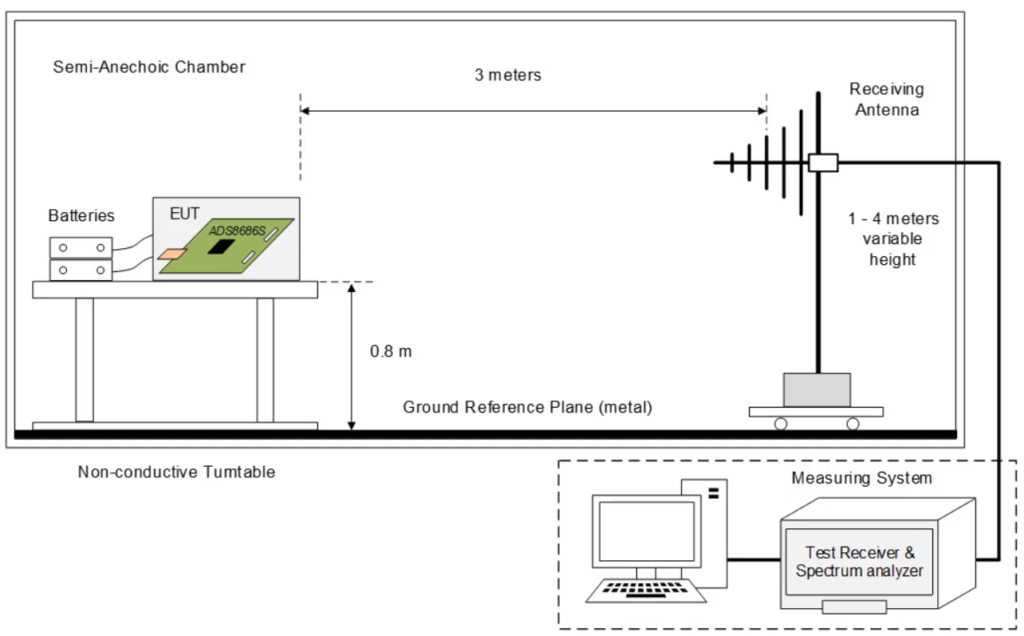
The setup is very similar to the radiated immunity test, however in this test, the antenna is receiving, rather than transmitting electromagnetic radiation. The RF is then measured by a spectrum analyzer which resides outside the anechoic chamber. Like for radiated immunity, vertical and horizontal antenna polarizations are tested. The table is rotated to determine if RF emissions are stronger in certain orientations.
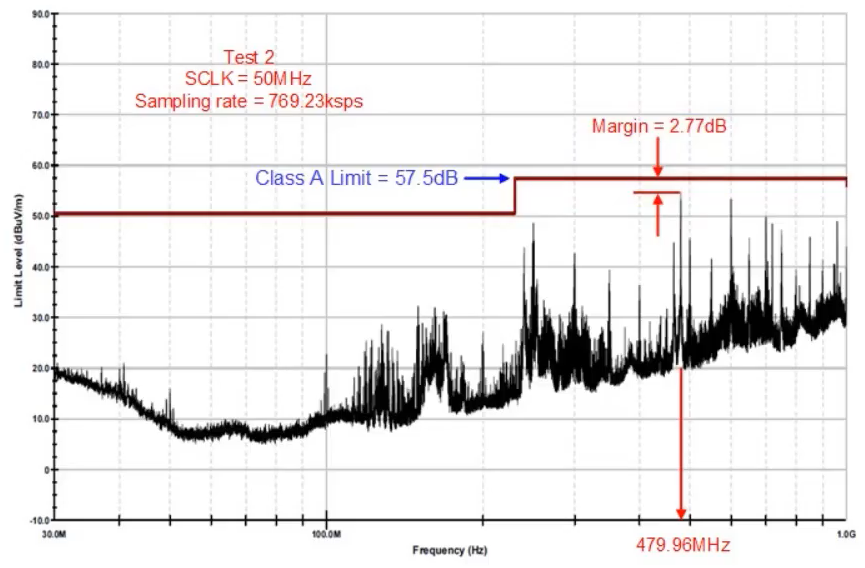
CISPR 11 defines two classes:
- Class A: industrial/professional (looser)
- Class B: residential (stricter)
3. Conducted Immunity — IEC 61000-4-6
Purpose: Verify EUT immunity to RF via electromagnetic radiation introduced on the cables/input (150 kHz–80 MHz)
Setup essentials
- RF generator + power amplifier is used to deliver the RF energy to the EUT
- Spectrum analyzer 1 verifies the generated RF signal
- Spectrum analyzer 2 monitors the injected signal via current probe
- Frequency sweep from 150 kHz – 80 MHz
- Modulation: 80% AM @ 1 kHz.
- Typical levels correspond to IEC levels 2 and 3 (e.g., 3 V & 10 V)
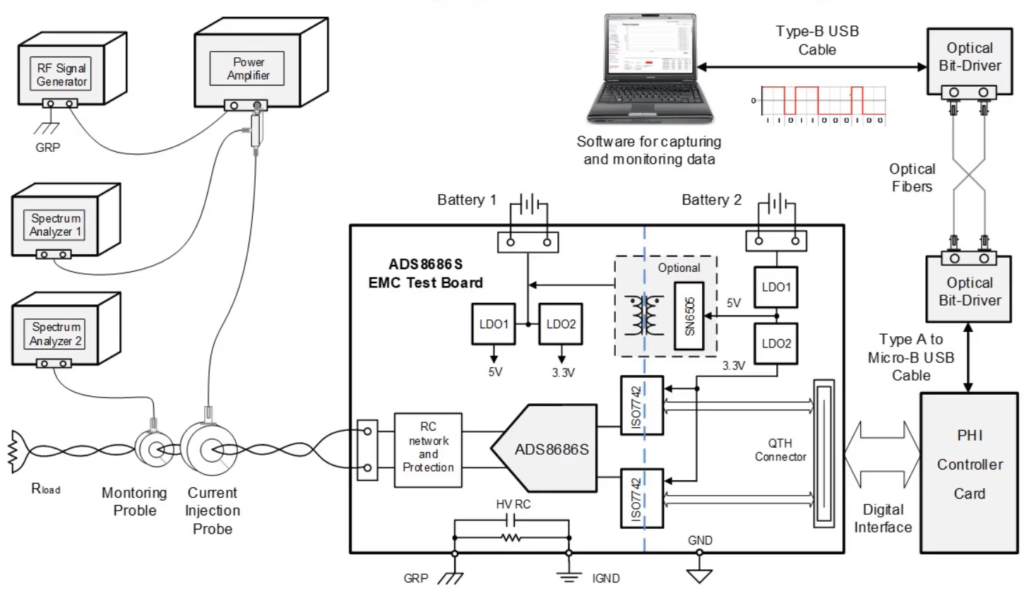

Ferrite beads are used to avoid test signals from interfering with test equipment. The goal of EMC testing is to test ONLY the EUT
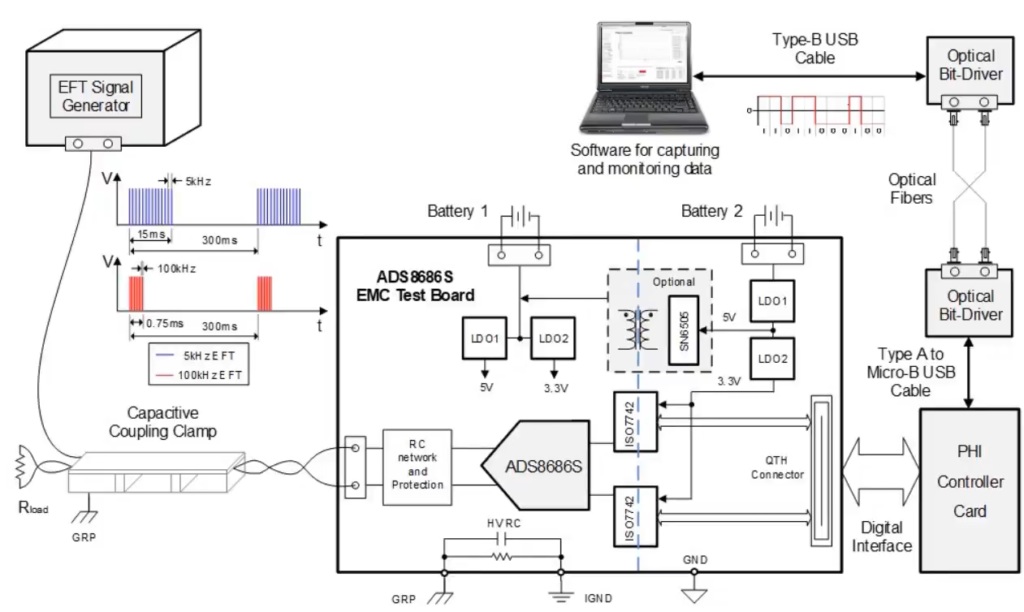
4. Electrical Fast Transients (EFT) — IEC 61000-4-4
Purpose: Emulate rapid, repetitive bursts from inductive switching such as relays and motors. Tests product robustness.
Test details
- Input signal is coupled capacitively onto lines using a coupling clamp
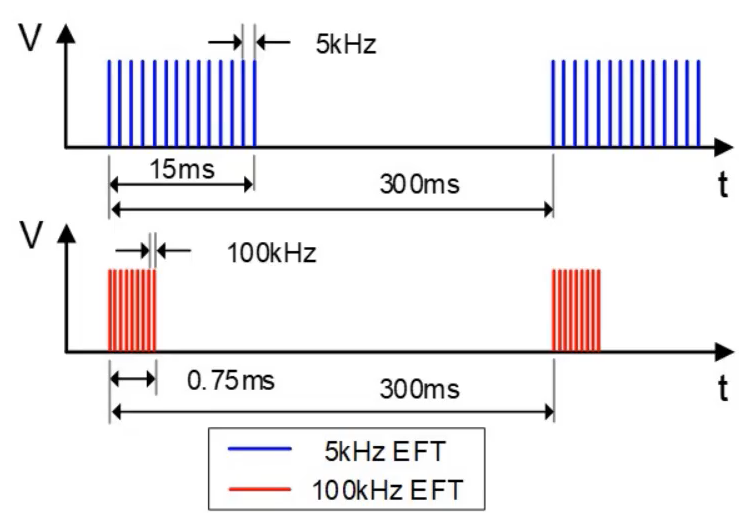
- The test signal is a series of rapid, high-voltage pulses ranging from 250V – 2kV
- The pulses are delivered in sets of 75 pulses are repeated every 300 ms.
- Two burst rates: 5 kHz (≈15 ms group) and 100 kHz (≈0.75 ms group).
- Test levels commonly ±1 kV, ±2 kV, ±4 kV
- Passing the EFT test involves adding overstress protection devices at the input and output connections
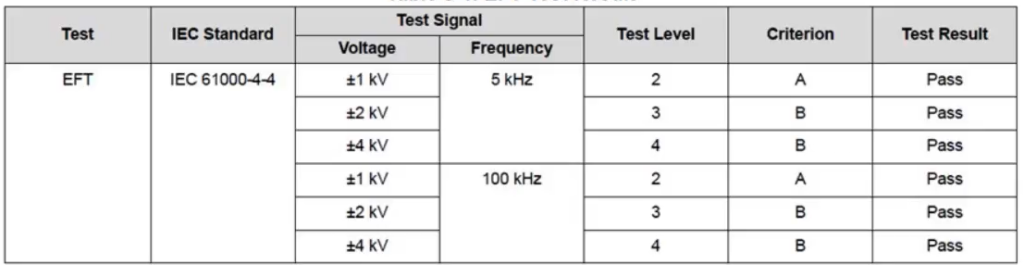
In this test, the EUT met criterion B: its performance temporarily degraded during interference but fully recovered once the interference was removed.
5. Electrostatic Discharge (ESD) — IEC 61000-4-2
Purpose: To simulate direct contact and air discharge ESD events
Test details
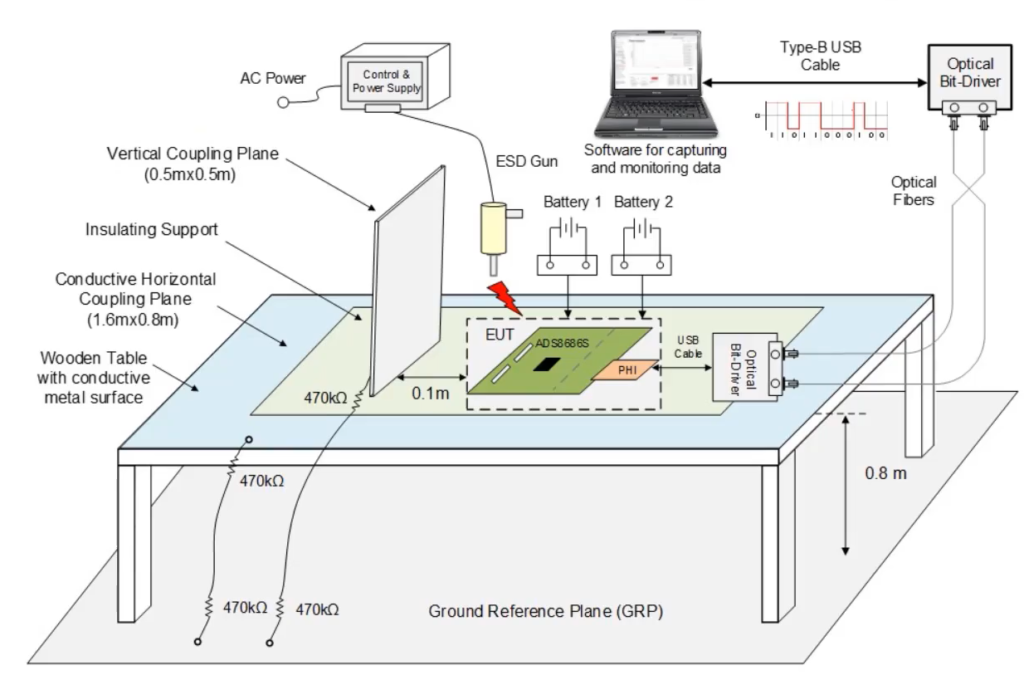
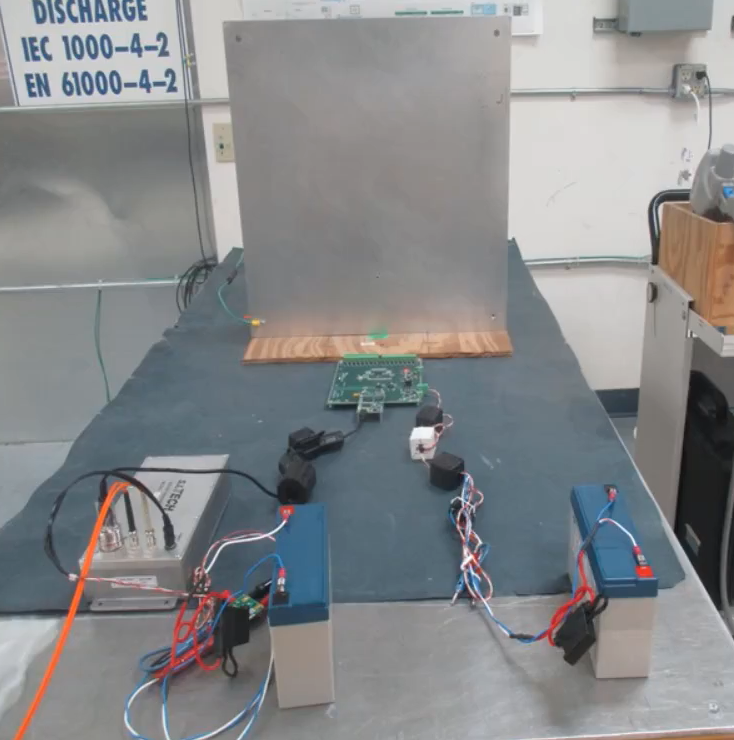
- For the contact discharge, an ESD gun is applied to the conductive points (e.g., screw terminals) of the EUT
- Air discharge test is performed to insulating surfaces. Indirect discharges to HCP (horizontal coupling plane) and VCP (vertical plane) near the EUT
6. Surge — IEC 61000-4-5
Purpose: Simulate High-energy surges from power switching and lightning environments
Test setup
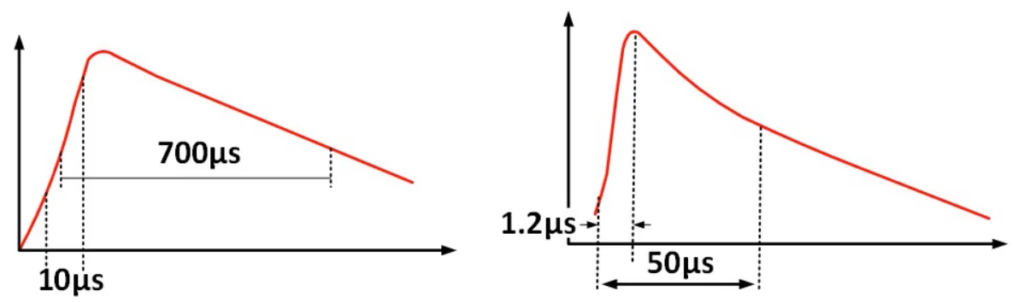
- IEC 61000-4-5 specifies the two types of Combination Wave Generators (CWG)
- 10/700 µs CWG used for testing symmetrical telecom lines.
- 1.2/50 µs combination wave generator is used for all other test cases
- Five positive + five negative surges at each rating spaced ≥ 1 min apart.
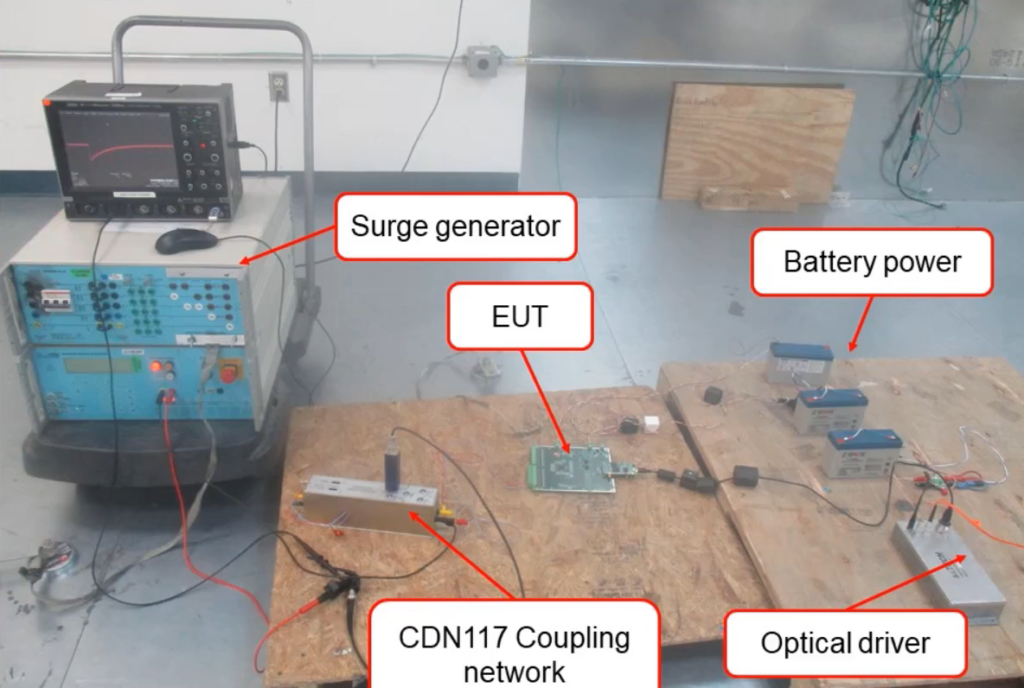
- CDN (coupling/decoupling network) is required. Consult IEC 61000-4-5 for the impedance and capacitance used in the CDN.
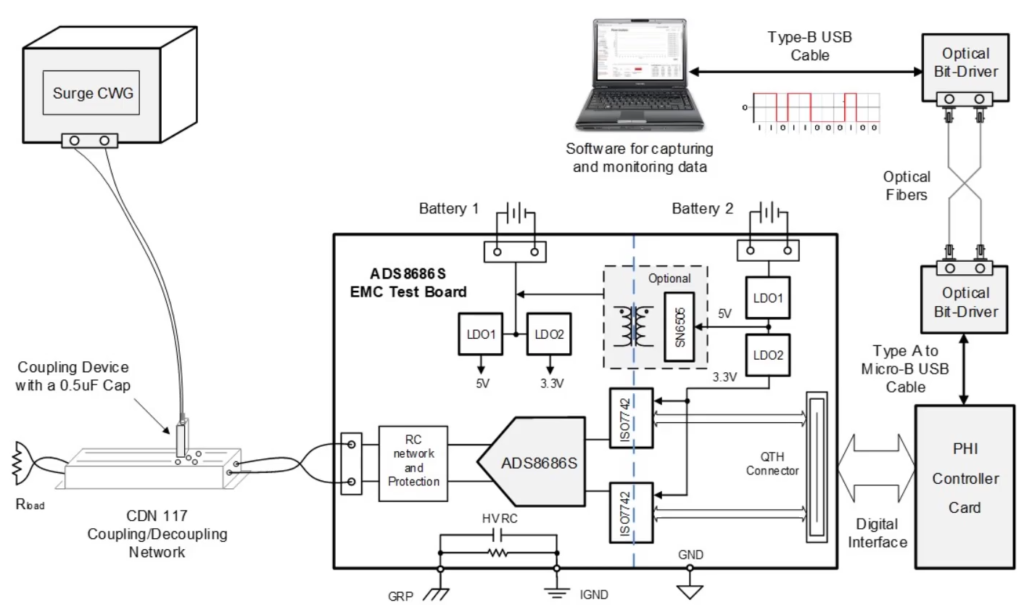
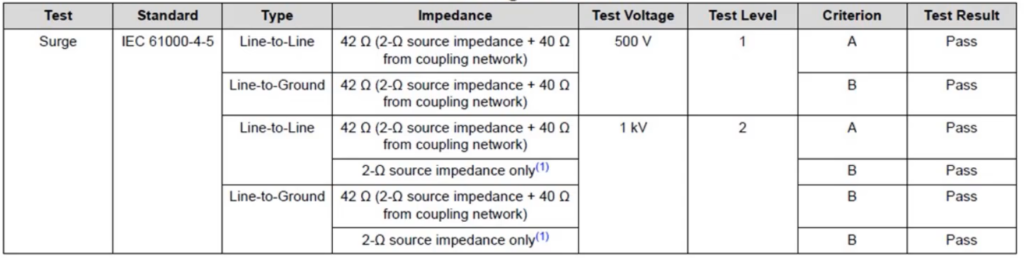
In the example above, a 2Ω source impedance translates to a 500A surge when 1kV is applied.
In surge testing, the input signal lasts much longer than in ESD testing—measured in microseconds rather than nanoseconds.
Like the other tests, the criterion and test levels are dictated by the IEC specification.
In Closing
This article summarized the subtests that occur during EMC testing.